QH8 Deployment
Non-Invasive
Infrastructure Telemetry
QH8 is deployed as a physical-layer evidence system for critical infrastructure.
The deployment model is designed to observe electrical and operational behavior without disrupting production, modifying equipment, rewriting control logic, or requiring access to internal IT networks by default.
QH8 helps operators turn facility telemetry into structured, tamper-evident evidence for infrastructure review, asset integrity, compliance support, insurance review, and commercial decision-making.
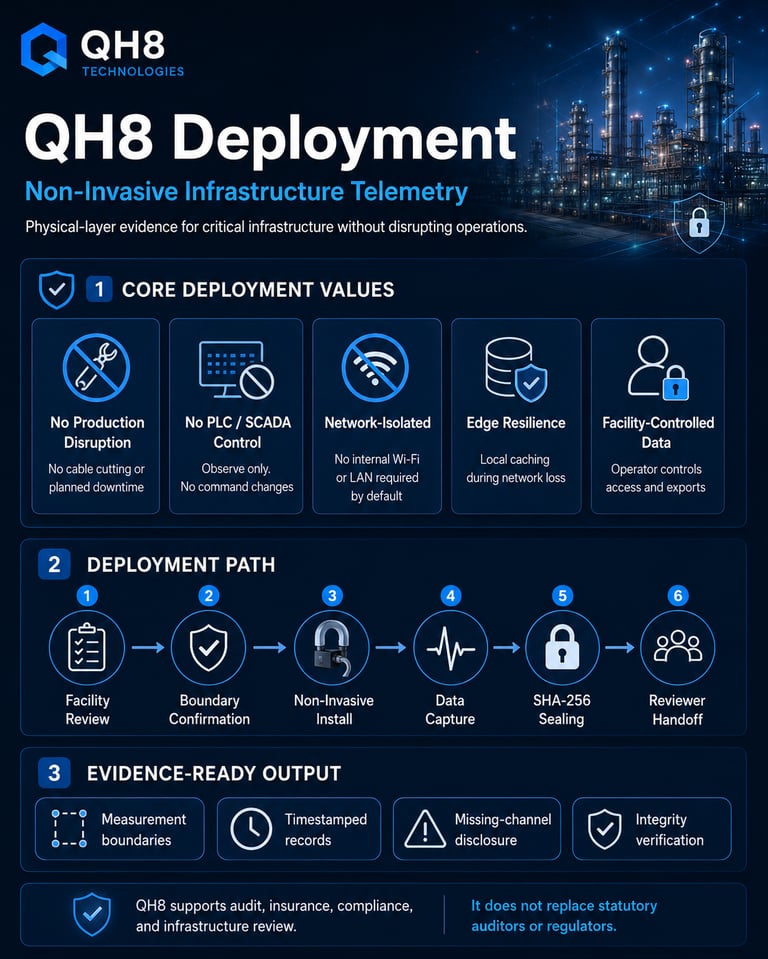
Core Deployment Values
1. Minimal Operational Interference
QH8 does not cut cables, splice wires, open live circuits, modify machinery, or require planned production downtime by default.
Deployment is coordinated with the facility’s engineering and safety teams around existing electrical infrastructure.
2. No PLC or SCADA Control
QH8 does not rewrite PLC logic, alter SCADA commands, or control production equipment.
The system observes operational behavior. It does not command the facility.
3. Network-Isolated by Default
QH8 does not require access to corporate Wi-Fi, internal LAN, factory intranet, or SCADA networks by default.
Telemetry can be handled through an isolated edge gateway, separate cellular transmission, or approved offline export depending on site policy.
4. Edge-Level Resilience
Industrial networks are not always stable.
If external connectivity drops, the QH8 edge node can retain telemetry locally and synchronize approved records once the connection is restored.
This helps reduce evidence gaps caused by temporary network loss.
5. Evidence-Ready Output
Captured telemetry can be converted into structured technical reports with:
Measurement boundaries
Timestamped records
Missing-channel disclosures
SHA-256 integrity records
Technical methodology notes
Reviewer handoff summaries
This supports stronger review by internal teams, buyers, auditors, lenders, insurers, and infrastructure stakeholders.
Where relevant, the same evidence layer can support CBAM readiness, Digital Battery Passport preparation, and third-party verification workflows.
Deployment Path
A typical QH8 deployment follows a simple sequence:
Facility review
Cybersecurity boundary confirmation
Electrical boundary selection
Target line or load selection
Non-invasive telemetry deployment
Edge gateway configuration
Data capture period
Operational analysis
SHA-256 evidence sealing
Technical report generation
Controlled handoff to approved reviewers
The process is designed to start small, prove value, and scale only where the commercial case is clear.What the Facility May Provide
6. Facility-Controlled Data
The facility remains the owner of its raw operational data.
QH8 structures telemetry into evidence records, but access to reports, exports, or reviewer packages remains controlled by the operator.Before deployment, QH8 may review:
Electrical single-line diagrams or equivalent layouts
Target equipment, load groups, or production areas
Existing meter data or utility bills
Maintenance or production records
Site safety procedures
IT / OT cybersecurity requirements
Only the information required for the agreed deployment scope is reviewed.
What QH8 Does Not Do
QH8 does not:
Control production equipment
Modify PLC or SCADA logic
Require internal Wi-Fi access by default
Require corporate intranet access by default
Replace statutory auditors, regulators, or certification bodies
Provide legal, tax, or customs advice
Guarantee buyer, insurer, regulator, or customs acceptance
QH8 provides the technical evidence layer underneath the review process.
Final decisions remain with the relevant buyer, auditor, lender, insurer, regulator, or statutory authority.
Request a Pre-Deployment Review
QH8 can review the facility boundary, cybersecurity requirements, and target infrastructure area before any technical deployment begins.